
In a tranquil fold of Yunnan’s hills, Shengguantun offers a rare blend of weathered heritage and minimalist luxury. A pr
The first light over Shengguantun does not break; it diffuses. Sitting on a low bench carved from salvaged walnut timber, I watch steam curl slowly from a hand-thrown ceramic cup of dark Dianhong black tea. Outside the seamless floor-to-ceiling glass, rain drops fall from gray-tiled eaves, beating a rhythmic pattern against smooth, cool river stones. The morning air carries the sharp, resinous perfume of pine needles drifted down from the high ridges above, laced with the soft dampness of turned earth.
For three weeks, this subtle cluster of restored historic courtyards in Yunnan has been my sanctuary. While travelers often hurry onward to the dramatic crowded streets of Dali or Lijiang, Shengguantun—nestled quietly away from Kunming’s urban pulse—offers something far rarer: a profound, intentional stillness. It is a destination where luxury is defined not by gilded surfaces, but by spatial clarity, tactile natural materials, and the soft patina of passing time.
### The Architecture of Stillness
The core tourism approach here has taken a remarkably restrained path. Rather than replacing the village’s aging rammed-earth (*hangtu*) structures, architects have carefully stabilized their weathered, ochre-hued exteriors while reimagining the interiors as warm, minimalist sanctuaries. Inside my room, rough lime-washed walls meet exposed cedar beams darkened by decades of kitchen smoke. The palette is strictly organic: muted charcoal, natural linen, raw stone, and pale oak.
*Travel Tip:* When reserving your residence at the village’s primary courtyard lodge, request a suite along the northern perimeter. These rooms feature private outdoor slate soaking tubs fed by local mountain spring water, perfectly positioned to capture the pale golden light of dusk.
### Sensory Gastronomy
Days begin unhurriedly in the dining pavilion, a converted stone granary with high glass gables. Meals are strictly seasonal and deeply tied to the immediate landscape. A morning broth is understated yet unforgettable: delicate hand-rolled rice noodles (*mixian*) floating in a clear capon broth infused with wild termite mushrooms foraged from the pine forests behind the village, finished with a dash of cold-pressed rapeseed oil and crushed mountain pepper.
By mid-afternoon, wander down the cobblestone alley near the old stone archway to the village tea pavilion. Here, charcoal embers glow silently inside an iron brazier. Drinking aged raw Puerh from an unglazed red clay bowl, you begin to feel the friction of modern travel melt away.
*Travel Tip:* If you visit between July and October, ask the lodge host to arrange an early-morning foraging walk with a local village elder. Beyond finding prized wild matsutake, it provides an intimate look at the mossy, mist-shrouded forest floor before the morning sun clears the canopy.
### Navigating the Lanes and Light
Shengguantun is best explored without an itinerary. The village lanes wind naturally along ancient stone irrigation channels where spring water glimmers softly in the shadows. Look closely and you will notice subtle design touches woven into daily village life: hand-forged brass latches on weathered oak doors, unvarnished wooden benches set beside modern cast-iron fire pits, and hand-loomed hemp textiles softening sleek stone counters.
While the small village core includes a few low-impact artisan spaces—an indigo dye studio utilizing indigenous mountain botanicals, and a quiet ceramics atelier—the atmosphere remains genuinely lived-in. Elders sit quietly on carved wooden stools peeling fresh broad beans, their soft local dialect blending with the wind through the tall silver birches.
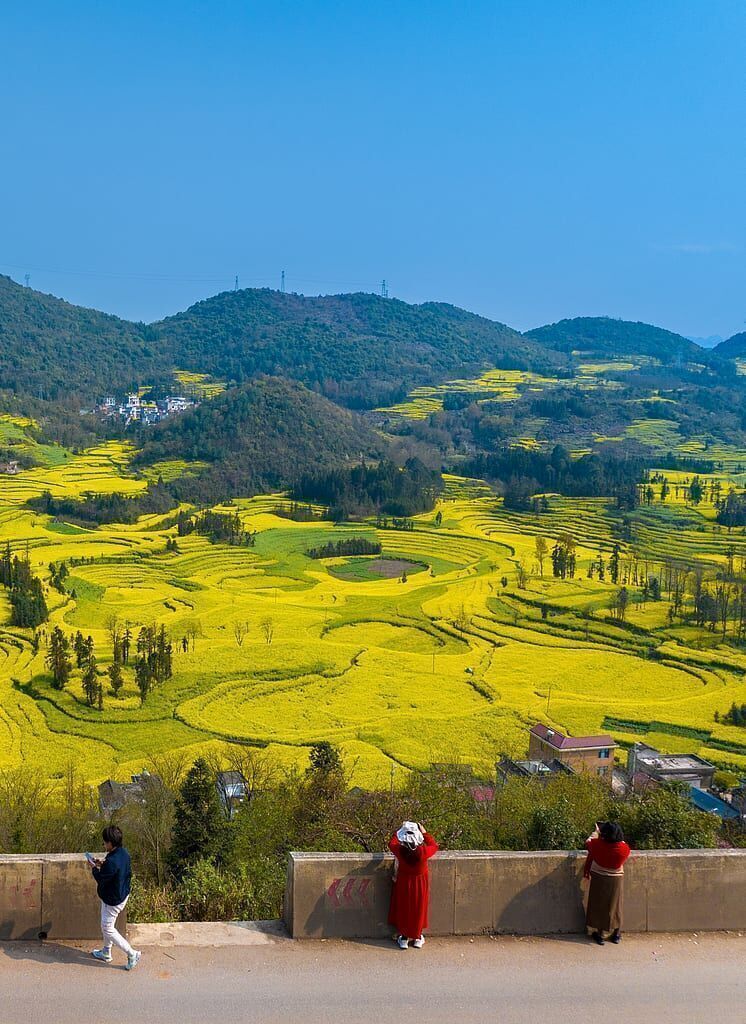
*Travel Tip:* The softest light hits the village’s eastern earth walls between 4:30 PM and 5:30 PM. Walk up to the elevated terraced fields behind the village square for a sweeping view over the tiled roofs; carry a light cashmere wrap, as the mountain air turns crisp the moment the sun drops behind the ridge.
### Leaving Room to Breathe
Shengguantun reminds us that true luxury is often an open space waiting to be filled by quiet light and focused attention. It is a masterclass in wabi-sabi—finding grace in the weathered, the unpolished, and the serene. Coming here is not about collecting sight-seeing spots, but about resetting your rhythm to match the quiet flow of rain, woodsmoke, and mountain fog.
*Getting Here:* Shengguantun is an easy 80-minute private transfer from Kunming Changshui International Airport. Arrange a private driver directly through your boutique accommodation, as local drivers occasionally miss the discreet, birch-lined entrance road leading into the village sanctuary.
读过之后,想来住几天吗?
朴归山居 · 云南升官屯 — 22°C 的东方侘寂旅居。
相关阅读
The Quiet Luxury of Yunnan: Where Wabi-sabi Meets Western Minimalism(云南旅居)
Beyond the crowds of Dali, a hidden valley in Yunnan unfolds
Yunnan's Hidden Glamping Paradise: Where Wabi-Sabi Meets Western Minimalism(云南旅居)
Among Yunnan's mist-wrapped mountains, a new breed of wilder
Wabi-Sabi and the Wired Life: A Digital Nomad's Yunnan(云南旅居)
In the mist-wrapped mountains of Yunnan, ancient Chinese imp